
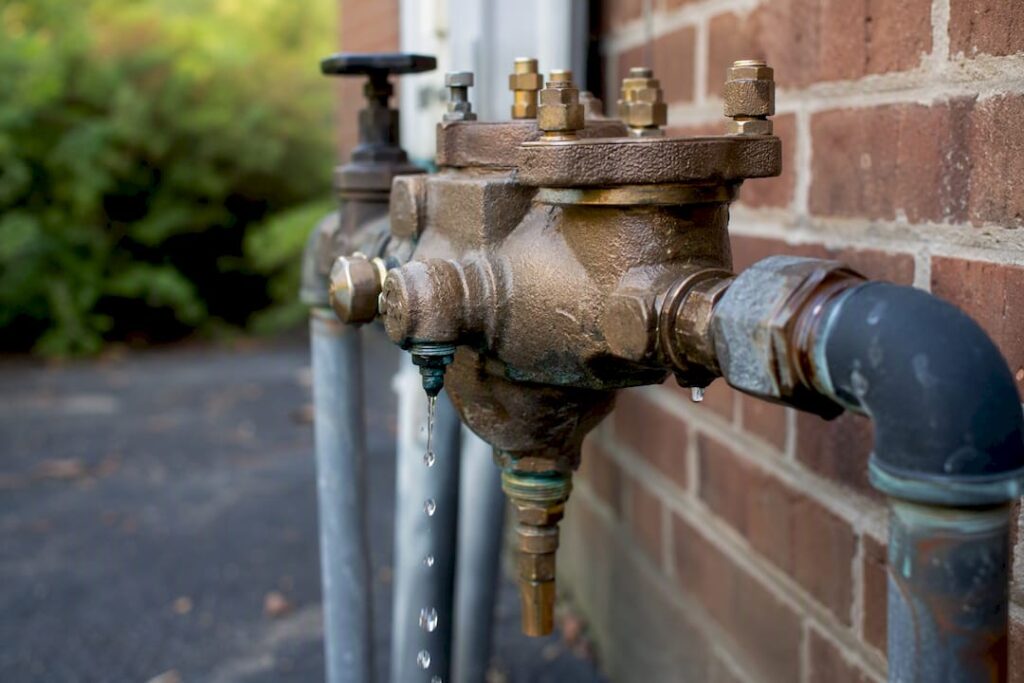
An RPZ relief valve that dumps water is doing exactly what it’s designed to do: protecting the potable supply the instant pressure conditions call for it. A short spit during a pressure swing is normal operation. A steady stream or repeated dumping means something inside the assembly, or somewhere in your system, has failed and needs diagnosis. Don’t cap the relief port. Watch when it happens, then get a certified tester on the schedule.
TL;DR:
- Relief valves that discharge water continuously often indicate internal wear, debris buildup, or pressure issues rather than normal operation.
- Diagnosing the problem involves observing discharge timing, performing simple isolation tests, and avoiding sealing the vent port to atmosphere.
- Common causes for dumping include sediment on check valves, worn elastomers or springs, pressure spikes, backpressure, and installation issues.
- Regular maintenance steps like installing a pressure-reducing valve, maintaining expansion tanks, and scheduling annual tests help prevent nuisance discharges.
- Most relief valve failures can be repaired with rebuild kits during a certified service visit, avoiding the need for full replacement.
Table of Contents
- What Does RPZ Relief Valve Dumping Actually Mean?
- How Do You Diagnose an RPZ Relief Valve That’s Dumping?
- What Causes an RPZ Relief Valve to Dump Water?
- What Should You Check Step by Step Before Calling for Repair?
- How Do You Prevent RPZ Relief Valves From Dumping Repeatedly?
- What Field Work Orders Reveal About Relief Valve Failures
- How Long Do RPZ Relief Valves Typically Last Before Dumping Starts?
- Does Water Quality Affect How Often the Relief Valve Dumps?
- Can Temperature Swings Cause Relief Valve Dumping Beyond Thermal Expansion?
- What Codes Govern RPZ Relief Valve Discharge?
- Is Relief Valve Discharge an Environmental or Health Concern?
- Why Most Advice on This Topic Misses the Point
- Getting a Certified RPZ Test and Repair in New Jersey
- Sources
What Does RPZ Relief Valve Dumping Actually Mean?
A reduced pressure zone assembly works by keeping the zone between its two check valves at a lower pressure than the incoming supply. When that pressure cushion shrinks to roughly 2 psi or less, the relief valve opens and dumps water to atmosphere. That’s not a malfunction. It’s the built-in fail-safe that keeps contaminated water from ever siphoning backward into the drinking supply.
The standard industry term for this device is a reduced pressure zone backflow preventer, and the relief valve is one component within it, sitting between the two internal check valves. Property managers usually just call the whole assembly “the RPZ” or “the backflow preventer,” and the relief mechanism is the part that acts like a pressure safety valve. Standards bodies like ASSE define the testing thresholds that govern exactly how tight that 2 psi differential needs to stay before a device fails inspection.
So when should you actually worry? Occasional dripping that coincides with a pump cycling on, a water heater firing up, or a main break down the street usually resolves on its own. Water that keeps coming, minute after minute, with no obvious trigger, means either a worn internal part or a system pressure problem is pushing the differential toward zero. That’s the line between “normal” and “needs a technician.”
How Do You Diagnose an RPZ Relief Valve That’s Dumping?
You don’t need a pressure gauge to narrow this down. A simple sequence of observations and one isolation test will usually tell you whether the fault lives upstream, downstream, or inside the device itself.
- Log the timing. Note exactly when the discharge starts and stops. Does it follow a booster pump cycle? Start right after someone runs hot water? Begin the same day a water main was repaired nearby? Timing is often the biggest clue you’ll get before a tester ever shows up.
- Run the no-gauge isolation test. Shut the downstream shutoff valve, the one on the building side of the assembly, and watch the relief port. If the discharge slows or stops, the problem likely sits downstream, meaning backpressure or a second check valve that’s leaking. If it keeps dumping regardless, suspect the first check valve or the relief assembly itself.
- Induce flow and watch for change. Open a downstream fixture or test cock briefly. A relief response that intensifies with flow changes points toward pressure fluctuation rather than a static internal leak.
- Match the outcome to urgency. Continuous discharge that doesn’t respond to isolation means you likely have a failed check or relief diaphragm and need service now. Intermittent discharge tied to a known trigger can often wait for a scheduled visit.
Pro Tip: Keep a phone log with timestamps and a ten-second video of the discharge pattern. When you call for service, that record cuts diagnostic time in half because the tester walks in already knowing what to test first.
Never plug, cap, or pipe the relief port into a sealed line to make the dripping stop. That vent has to discharge freely to atmosphere by code, and blocking it turns a safety valve into a pressure bomb.
What Causes an RPZ Relief Valve to Dump Water?
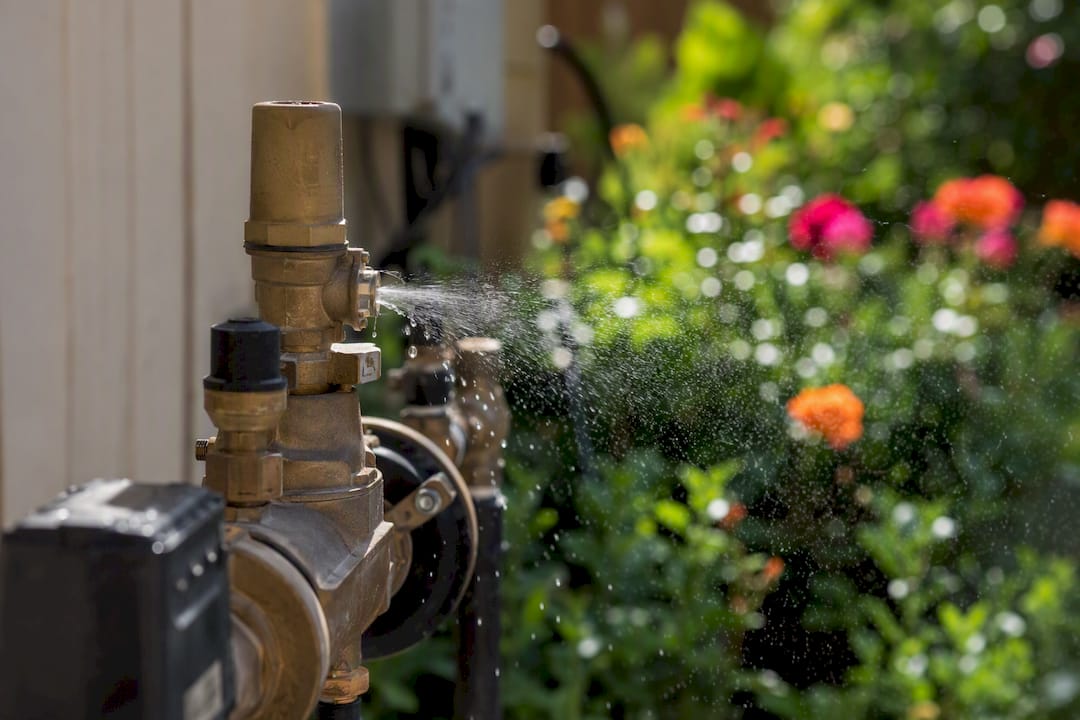
Most relief valve discharge traces back to one of a handful of repeat offenders, and matching your symptoms to the right one saves a lot of guesswork.
- Debris on the check valve seats. After a water main break or nearby construction, grit and sediment travel downstream and lodge on the first check valve seat, holding it slightly open and collapsing the pressure differential.
- Worn elastomers, springs, or relief diaphragms. Rubber discs, O-rings, and springs degrade over years of cycling. Once they lose tension or shape, the relief valve trips at a lower differential than it should.
- Pressure spikes and water hammer. A quick-closing valve elsewhere in the building sends a pressure wave through the pipes, and the relief valve reacts to a spike it was never meant to absorb.
- Downstream backpressure or thermal expansion. In a closed system with a missing or failed expansion tank, heated water has nowhere to expand, and that backpressure pushes into the zone and triggers relief.
- Bad installation or a restricted drain. An RPZ mounted too close to a wall, or a drain line that’s undersized or trapped, creates nuisance discharge even when the internals are fine.
- Undersized assembly or freeze and chemical damage. An RPZ sized for average flow can trip under peak demand, and a device that froze last winter or sat exposed to harsh chemicals often shows internal wear years ahead of schedule.
A backflow preventer valve typically has two check valves and one relief valve working together, and the relief only responds to what’s happening between them. If the differential collapses for any of the reasons above, the relief valve does the only thing it can: it opens.
What Should You Check Step by Step Before Calling for Repair?
Run through the sequence in order. Each step either resolves the mystery or hands the certified tester exactly what they need to work faster.
- Observe and log the discharge pattern for at least one full cycle (a pump run, a hot water draw, or a 24-hour period if the pattern is unclear).
- Shut the downstream isolation valve and note whether discharge stops, slows, or continues unchanged.
- Open a test cock or downstream fixture briefly to see whether inducing flow changes the pattern.
- Visually inspect the relief port and drain line for obstruction, then flush the line if it’s safe to do so without disturbing the assembly.
- If discharge is continuous and doesn’t respond to isolation, shut the main and call for emergency service rather than waiting.
When a certified tester arrives, they measure something you can’t eyeball: the actual inlet, zone, and outlet pressure differentials, plus the exact pressure at which the relief valve opens. Those readings, not guesswork, determine what gets fixed.
Most service visits resolve with a manufacturer rebuild kit rather than a full assembly swap. Replacing seats, discs, O-rings, and springs restores the original differential without the cost of a new device.
Pro Tip: Ask whoever services your device to note the exact relief opening pressure on the invoice. That number becomes your baseline. If it drifts downward at your next annual test, you’ll catch a developing problem before it turns into a flood.
How Do You Prevent RPZ Relief Valves From Dumping Repeatedly?
Preventing nuisance discharge comes down to controlling the two things that push the differential toward its trip point: supply pressure and system backpressure.
- Install and maintain a pressure-reducing valve (PRV) and a properly charged expansion tank. Together they keep supply pressure steady and give heated water somewhere to expand besides your RPZ.
- Add an upstream strainer where sediment risk runs high, especially on older mains or properties near recent construction, so debris never reaches the check valve seats.
- Confirm installation meets code, including correct orientation, clearance for service access, and a properly sized air-gapped drain that can handle full-flow discharge without backing up.
- Schedule annual certified testing, and add a follow-up inspection any time there’s a main break, hydrant flushing, or nearby construction that could introduce debris.
- Keep dated records of every test, repair, and pressure event near your property. That history is often the fastest way to explain a sudden dump six months later.
| Preventive step | What it controls | How often |
|---|---|---|
| PRV inspection | Supply pressure spikes | Annually |
| Expansion tank check | Thermal expansion backpressure | Annually or after water heater service |
| Strainer cleaning | Sediment and debris fouling | annual |
| Certified RPZ test | Overall differential and relief point | Annually, plus after main repairs |
Get the installation details right the first time and you eliminate an entire category of nuisance dumping before it starts.
What Field Work Orders Reveal About Relief Valve Failures
A representative work order usually starts the same way: a property manager reports intermittent dripping after a nearby water main repair. The diagnostic sequence, no-gauge isolation, then induced flow, points to debris on the first check seat. The fix is a rebuild kit, not a replacement, and the device passes recertification the same visit. That pattern shows up in South Jersey Backflow’s testing records repeatedly enough to be the default assumption, not the exception. A full service visit includes the diagnostic test, the physical repair, retesting to confirm the differential, and filing the certified report directly with the local water authority.
How Long Do RPZ Relief Valves Typically Last Before Dumping Starts?
Most reduced pressure zone assemblies deliver reliable performance for years before internal wear starts producing nuisance discharge, though “years” varies widely depending on water quality, cycling frequency, and installation conditions. A device in a high-turnover commercial building that cycles constantly wears differently than one on a low-flow residential line.
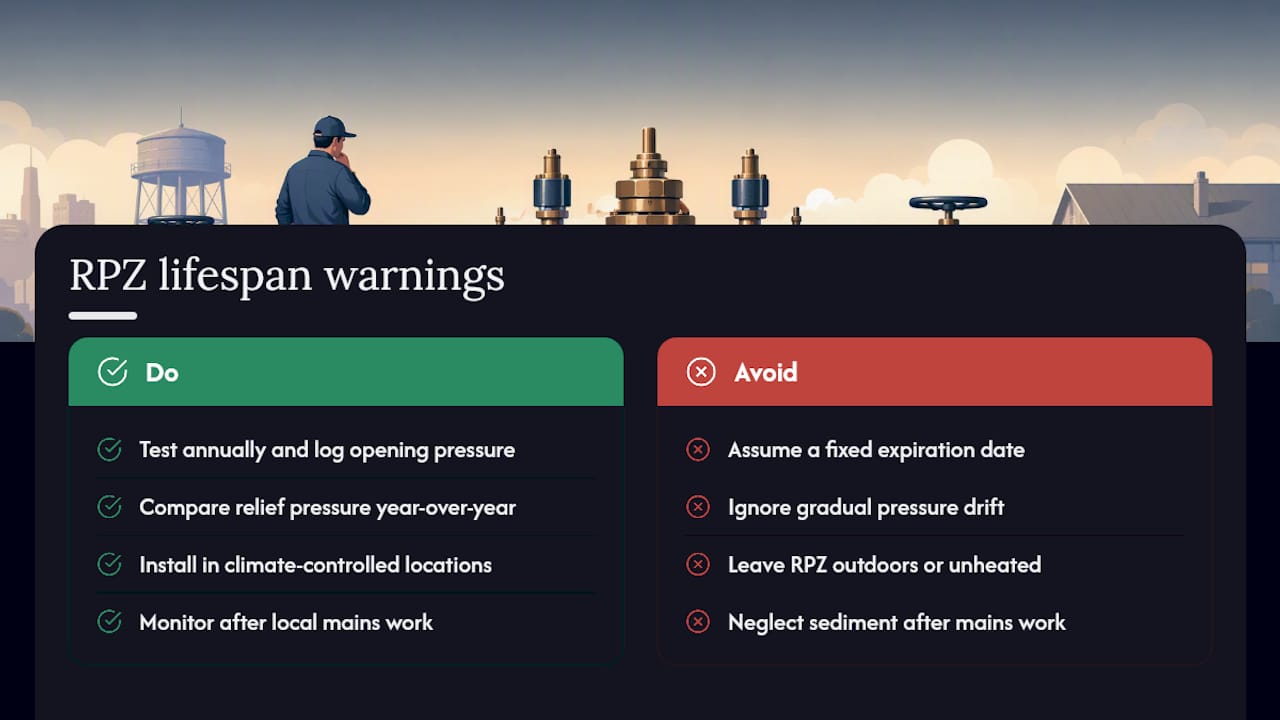
The elastomers and springs inside the relief mechanism are the first parts to lose their original tolerance. Once a rubber seat compresses permanently or a spring loses tension, the pressure differential needed to keep the relief valve closed shrinks. That’s not a sudden failure. It’s a slow drift, which is exactly why annual testing matters: a tester tracking the relief opening pressure year over year catches that drift long before it turns into a constant drip.
Devices installed outdoors or in unheated mechanical rooms tend to show wear faster, especially where freeze cycles stress the rubber components. Indoor, climate-controlled installations generally hold their factory tolerances longer. Properties near recent water main work or in areas with older cast iron infrastructure also see accelerated wear because sediment load stays elevated for months after any disturbance to the mains.
There’s no fixed “expiration date” stamped on an RPZ. What you can track is the relief opening pressure logged at each annual test. When that number starts drifting closer to the zone pressure, that’s your early warning sign, not the dumping itself.
Does Water Quality Affect How Often the Relief Valve Dumps?
Hard water and high sediment loads accelerate almost every failure mode that leads to relief valve discharge. Mineral scale builds up on check valve seats and springs over time, and that buildup prevents a full, clean seal, which lowers the effective pressure differential the same way physical debris does.
Sediment is the more immediate culprit. Any disturbance to the water main, whether from a repair crew, hydrant flushing, or seasonal main flushing programs that many utilities run, stirs up grit that travels downstream and lodges directly on the first check valve seat. That’s the single most common trigger testers report for sudden-onset dumping in properties that had no prior history of issues.
Properties on wells or older municipal systems with iron or manganese content face a compounding problem: mineral deposits combine with sediment to form a harder film that a simple flush won’t clear. In those cases, an upstream strainer isn’t optional maintenance, it’s the difference between annual rebuilds and multi-year reliability.
If your property sits in an area with known hard water or a utility that flushes hydrants seasonally, treat those events as trigger points for inspection, not just background noise. A quick check of the relief port after any known mains disturbance costs you five minutes and can catch fouling before it becomes a continuous discharge.
Can Temperature Swings Cause Relief Valve Dumping Beyond Thermal Expansion?
Thermal expansion gets most of the attention, but temperature swings affect relief valve behavior in ways that go beyond simply pushing heated water against a closed system. Cold temperatures change how the internal elastomers behave mechanically, not just how much the water itself expands.
Rubber components stiffen in cold conditions, which changes their sealing characteristics at the exact moment seasonal demand patterns shift. A relief diaphragm or check valve disc that seals perfectly in summer can develop a slightly different sealing profile once ambient temperatures drop, particularly in outdoor enclosures or unheated mechanical spaces. That’s part of why devices installed outdoors show a different failure pattern than indoor units, independent of any freeze damage.
Rapid temperature cycling, hot water draws followed quickly by cold refills, also stresses the check valve springs differently than steady-state operation. Over enough cycles, that stress contributes to the same spring fatigue that eventually lowers the relief valve’s trip point.
None of this means you need to chase every degree of temperature change. It does mean that a device showing seasonal patterns in its discharge, worse in winter, worse right after the first cold snap, deserves a look at the physical condition of its internal rubber and springs rather than an assumption that it’s purely a pressure problem.
What Codes Govern RPZ Relief Valve Discharge?
Reduced pressure zone assemblies operate under plumbing and cross-connection control standards that specify both how the device must perform and how its discharge must be handled. ASSE standards define the testing procedures and pressure thresholds, including the differential that governs when a relief valve should open, that certified testers use to determine pass or fail.
Local and state plumbing codes layer additional requirements on top of the assembly standard itself, most importantly around the drain. An RPZ relief port must discharge to atmosphere through an air gap or a properly sized, trapless drain line, never into a sealed pipe or directly connected sewer line. That requirement exists because the relief valve is a safety device: if it can’t discharge freely when it needs to, the backflow preventer can’t do its job.
Annual certified testing is the compliance backbone across most jurisdictions, and many water authorities require an additional test after any repair, replacement, or suspected contamination event. That’s not bureaucratic overreach. A device that’s been opened for repair needs to be re-verified before anyone trusts it to protect the potable supply again. Compliance records, test dates, results, and repair history, typically get filed directly with the local water authority rather than kept solely by the property owner, which is why working with a tester who handles that filing directly saves a real administrative headache.
Is Relief Valve Discharge an Environmental or Health Concern?
The water discharged from an RPZ relief valve comes from the reduced pressure zone between the two check valves, not from the contaminated source the device is protecting against. Under normal operation, that discharge is potable water that simply hasn’t crossed into the risk zone the assembly is guarding.
The concern isn’t usually chemical contamination of the discharge itself. It’s volume and destination. A relief valve dumping continuously can release a meaningful amount of water in a short period, and if that drain line empties into a mechanical room, a finished basement, or anywhere without proper floor drainage, you get water damage long before you get a health hazard. That’s exactly why code requires a properly sized, air-gapped drain sized for full discharge capacity, not a token line that handles an occasional drip but backs up under sustained flow.
Containment matters most in properties where the RPZ sits near sensitive equipment, electrical panels, network infrastructure, storage of paper records or inventory. A floor drain rated for the assembly’s maximum discharge rate, positioned so it can’t be blocked by stored materials, is the baseline containment measure every property should confirm during installation or annual inspection. For properties in flood-prone areas or with finished mechanical spaces, a secondary containment basin with its own drain adds a layer of protection that a simple floor drain doesn’t provide on its own.
Why Most Advice on This Topic Misses the Point
Most guidance on relief valve dumping treats it as a binary: either it’s fine or you need a plumber. That framing skips the part that actually matters to a property manager, which is triage. You don’t need to know whether it’s a worn spring or a fouled seat before you pick up the phone. You need to know whether it’s safe to wait until Monday or whether you need someone there tonight.
The no-gauge isolation test earns its place in this article because it answers that exact question in under five minutes with tools you already have: your hands and a shutoff valve. Conventional advice tends to jump straight to “call a professional,” which is correct eventually, but it wastes the one window where a property manager can make an informed decision about urgency.
If there’s one habit worth building, it’s logging the trigger, not just the discharge. A relief valve that dumps every time the booster pump kicks on is telling you something completely different than one that dumps at 3 a.m. with nothing running. Most people log the water. Few log the timing. The timing is usually what actually points a technician toward the fix on the first visit instead of the second.
— Jordan
Getting a Certified RPZ Test and Repair in New Jersey
Southjerseybackflow handles the exact diagnostic sequence covered here as a routine part of every service call, backed by the same no-gauge isolation testing and pressure measurements described above, without asking you to figure out the cause yourself first. If your relief valve is dumping and you’d rather have a certified tester confirm the differential and fix it the same visit than guess at rebuild kits online, that’s precisely the gap this service closes.

Every visit includes the diagnostic test, the physical repair using manufacturer rebuild kits where possible, retesting to confirm the corrected differential, and direct filing of the certified test report with your local water authority, so you’re not stuck chasing paperwork after the repair is done. Property managers running multiple sites can consolidate billing across locations instead of juggling separate invoices. If your device is dumping right now, or your annual test is coming due, reach out through South Jersey Backflow to get a technician scheduled before an intermittent drip turns into an emergency call.
Sources
- How To Evaluate What Is Causing the Reduced Pressure Principle Assembly Relief Valve Discharge
- Why Is The Relief Valve On My RP (Reduced Pressure) Assembly Discharging Water?
- RPZ relief valve discharge troubleshooting (Reece)
- Reduced Pressure Zone Assembly (RPZ) — Backflow Prevention | Bates Plumbing