
TL;DR:
- A thorough backflow company background check verifies technician certifications, personnel screening, and equipment calibration to ensure compliance. Property managers must confirm technicians are listed on local water authority approved lists, with valid certifications, recent calibrations, and comprehensive background screening. Relying solely on company licenses or low bids risks rejection, non-compliance, and potential water shutoffs, so due diligence is essential.
A backflow company background check is a multi-step vetting process that confirms the credentials, safety screening, and equipment reliability of technicians servicing your property’s backflow preventers. For New Jersey property owners and managers, skipping this process is not just risky — it can result in rejected test reports, compliance failures, and direct liability exposure. The right check covers three distinct layers: backflow certification verification, criminal and drug screening of field personnel, and calibration confirmation for test equipment. Each layer protects you in a different way, and none of them can substitute for the others.
What certifications and licenses to verify for a backflow company background check
Backflow tester certification and a plumbing license are not the same credential, and confusing the two is one of the most common mistakes New Jersey property managers make. A plumbing license does not guarantee that a technician is qualified to test backflow prevention assemblies. Backflow testing requires a separate, specialized certification, and in New Jersey, the specific certification accepted varies by water authority.
The most widely recognized technician-level certifications include ASSE 5110 and credentials issued by the American Backflow Prevention Association (ABPA). However, holding a national certification is not enough on its own. Backflow testers must appear on your local water utility’s approved tester list. A technician certified by ASSE but not listed with your specific water purveyor cannot legally submit a valid test report on your behalf.
New Jersey property managers should verify the following before signing any service agreement:
- The technician’s certification type and issuing body (ASSE 5110, ABPA, or equivalent)
- The certification number and expiration date
- Confirmation that the technician appears on your local water authority’s approved tester list
- The company’s process for tracking and renewing certifications before they lapse
Certification expiration is a real compliance trap. Expired certifications invalidate reports, meaning a test performed by a lapsed technician is treated as if no test occurred at all. That outcome triggers the same penalties as a missed deadline.
Pro Tip: Ask the company to provide the technician’s certification number before the appointment. Then call or check your water authority’s website directly to confirm the name appears on the current approved list. This takes five minutes and eliminates the most common source of test rejection.
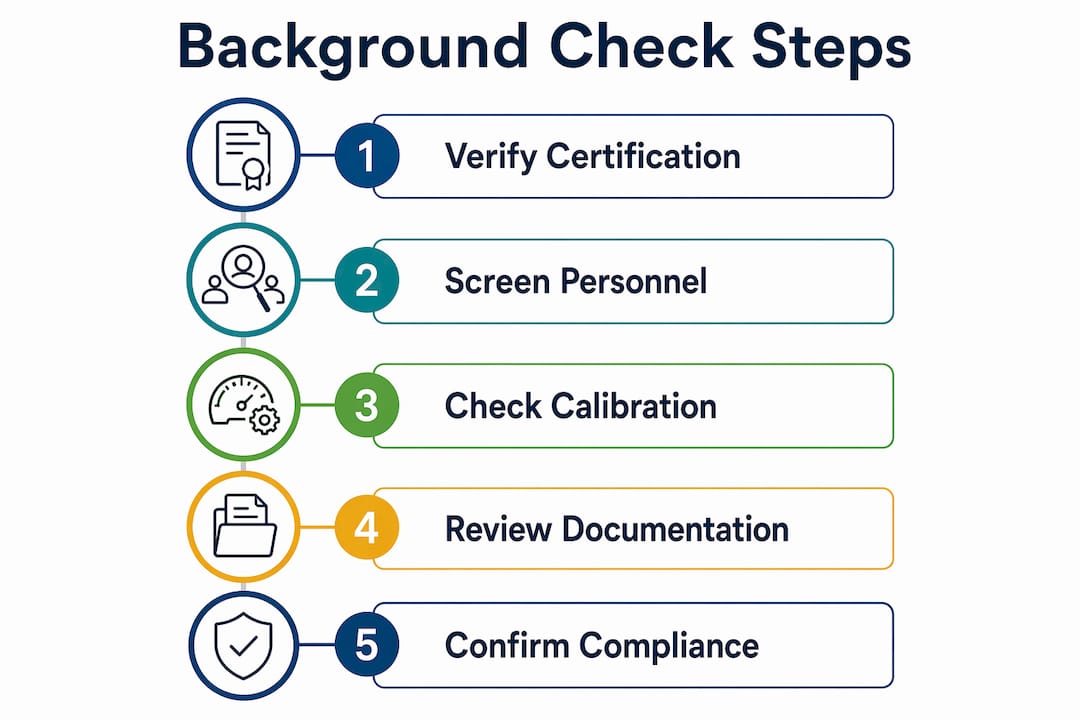
For a deeper look at how New Jersey structures its backflow certification requirements, the local approval process adds another layer of specificity that national certification guides often miss.
How to screen backflow service personnel for criminal and drug history
A state-issued plumbing or backflow license does not automatically include a criminal background check, a drug screen, or a driving record review. These are separate processes, and top companies include criminal history, motor vehicle record (MVR), and drug testing as standard components of their hiring process. As a property manager, you are granting access to your building, mechanical rooms, and sometimes occupied units. The person showing up matters as much as the company name on the truck.
A thorough personnel screening for backflow service providers should include:
- Multi-state criminal history search
- Sex offender registry check
- Motor vehicle record (MVR) review
- Pre-employment drug testing
- Ongoing or periodic re-screening throughout employment
The last point is frequently overlooked. Continuous background screening of field staff throughout employment is the standard that separates professional service companies from those that only screen at hire. A technician who passed a background check three years ago may not be the same person showing up today.
Companies that screen 100% of field staff and maintain those records reduce workplace incidents and liability claims by 40%. That figure reflects the direct financial and safety impact of rigorous personnel vetting. For a property manager, it translates to fewer incidents, lower insurance exposure, and stronger legal standing if something does go wrong.
When evaluating a backflow service provider, ask for their written screening policy. Reputable companies will provide it without hesitation. Also look for third-party trust signals: Google Guaranteed status and a BBB A+ rating both indicate that the company has submitted to external verification of its business practices and personnel standards.
Pro Tip: Request the company’s background screening policy in writing before the first appointment. If they cannot produce one, treat that as a disqualifying red flag regardless of price or availability.
Why equipment calibration is a non-negotiable part of vetting backflow testers
Test equipment calibration is the most technical layer of a backflow testing company vetting process, and it is the one most property managers never think to ask about. Backflow testers use differential pressure gauges and manometers to measure whether a backflow preventer is functioning correctly. If those instruments are out of calibration, the readings are unreliable, and the test result is meaningless regardless of what the report says.
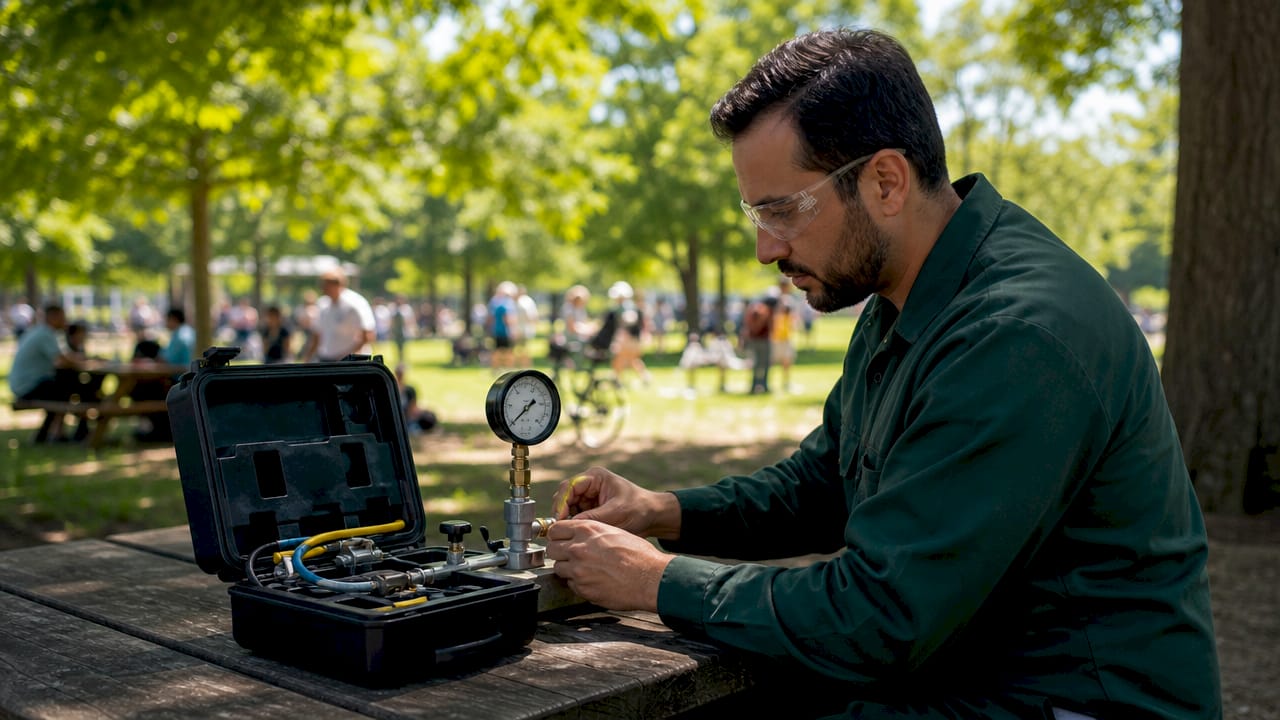
Bad calibration of backflow test equipment can cause test rejections, leading to delays or water shutoff risks. A water purveyor can reject a submitted test report if the calibration documentation is missing or expired. That rejection puts you back at square one, with a compliance deadline still approaching.
The table below shows the difference between calibrated and uncalibrated equipment scenarios:
| Scenario | Outcome |
|---|---|
| Calibrated equipment, documentation provided | Test report accepted; compliance confirmed |
| Calibrated equipment, no documentation | Report may be delayed pending verification |
| Uncalibrated equipment, test submitted | Report rejected; retest required |
| Uncalibrated equipment, no disclosure | Compliance failure; potential water shutoff risk |
The industry standard is annual calibration by a laboratory with ISO/IEC 17025 accreditation using NIST-traceable standards. This is not a suggestion. It is the benchmark that water authorities use to evaluate whether submitted test data is trustworthy.
Before hiring any backflow service provider, request the calibration certificate for the specific test kit the technician will use. Ask for the serial number as well. Including test kit serial numbers and calibration dates on submitted test reports speeds acceptance by water authorities and creates a clear audit trail. Professional companies maintain this documentation as a matter of routine and will provide it without being asked twice.
How to perform a step-by-step background check on a backflow company
A structured vetting process removes guesswork and gives you a defensible record of due diligence. Follow these steps in order before committing to any backflow service provider:
-
Gather company information. Collect the company’s full legal name, state business registration, and physical address. Search Google, the BBB, and your state’s contractor licensing database to confirm the business is active and in good standing.
-
Verify technician certification. Request the name, certification type, certification number, and expiration date for every technician who will work on your property. Cross-reference each name against your local water authority’s approved tester list. Do not accept company-level assurances. Verify at the technician level.
-
Request the personnel screening policy. Ask the company to provide its written background check policy. Confirm it covers criminal history, MVR, drug testing, and ongoing re-screening. Ask specifically whether 100% of field staff are covered, not just new hires.
-
Request calibration documentation. Ask for the calibration certificate and serial number for the test kit assigned to your job. Confirm the calibration was performed within the past 12 months by an ISO/IEC 17025 accredited laboratory.
-
Review a sample test report. Ask to see a redacted sample of a completed test report. Confirm it includes the technician’s certification number, the equipment serial number, and the calibration date. A report missing any of these elements may be rejected by your water authority.
-
Evaluate trust signals and finalize. Check for Google Guaranteed status, BBB rating, and online reviews from other property managers. Confirm the company’s process for submitting completed test reports directly to your water authority on your behalf.
Pro Tip: Keep a copy of every document you collect during this process, including the certification verification, screening policy, and calibration certificate. If a compliance dispute arises, this file is your evidence that you exercised proper due diligence.
Understanding how often testing is required in New Jersey also helps you build a vetting timeline that aligns with your compliance calendar rather than reacting to deadline pressure.
Common mistakes to avoid when vetting backflow testing companies
Most compliance failures in backflow testing trace back to a small set of avoidable errors. Knowing them in advance is the difference between a smooth annual process and a rejected report.
-
Assuming the company license covers everything. A business license and a plumbing license confirm the company is legally operating. Neither confirms that individual technicians hold current backflow certifications or that personnel have been screened.
-
Skipping technician-level validation. Vetting the company without verifying the specific technician assigned to your job is the most common oversight. The critical step often overlooked by property managers is confirming that the individual technician holds a valid certification recognized by the local water authority.
-
Ignoring certification expiration dates. Certifications lapse. A company that was fully compliant six months ago may have a technician whose credentials expired last month. Always verify the expiration date, not just the existence of a certificate.
-
Overlooking equipment calibration. Asking about calibration feels technical and easy to skip. But an uncalibrated test kit produces data that a water authority can reject outright, sending you back to square one.
-
Hiring on price alone. The lowest bid often reflects shortcuts in personnel screening, equipment maintenance, or certification management. A rejected test report costs more in time and risk than the difference between two bids.
-
Not confirming report submission. Some companies complete the test but leave report submission to the property owner. Confirm in writing that the company will submit the completed test report directly to your water authority and provide you with a copy.
Key takeaways
Thorough backflow company background checks require verifying technician certifications against local water authority lists, confirming 100% personnel screening, and requesting ISO/IEC 17025 calibration certificates before any work begins.
| Point | Details |
|---|---|
| Certification verification | Confirm each technician appears on your local water authority’s approved tester list, not just a national registry. |
| Personnel screening depth | Require written proof that all field staff pass criminal, MVR, and drug screenings, including ongoing re-screening. |
| Equipment calibration | Request the calibration certificate and serial number; annual ISO/IEC 17025 accredited calibration is the standard. |
| Report documentation | A valid test report must include the technician’s certification number, equipment serial number, and calibration date. |
| Avoid price-only decisions | The lowest bid rarely reflects the full cost of a rejected report, a compliance failure, or a liability incident. |
What I’ve learned from watching property managers skip these steps
I have seen the same pattern repeat itself more times than I can count. A property manager hires a backflow company based on a referral or a Google search, assumes the company has handled everything, and then receives a rejection notice from the water authority three weeks later. The technician’s certification had lapsed. The test report was missing the equipment serial number. The company had no written screening policy. None of these things were checked in advance.
The uncomfortable truth is that most property managers treat backflow testing as a checkbox, not a compliance process. They want it done, documented, and off their list. That mindset is exactly what creates vulnerability. A rejected test report is not just an inconvenience. It restarts the compliance clock, creates a paper trail of non-compliance, and in some cases triggers a water shutoff notice.
What I have found actually works is treating the vetting process the same way you would treat a contractor bid for a capital project. You would not hire a roofing company without verifying insurance, licensing, and references. Backflow testing deserves the same rigor, especially because the consequences of failure are regulatory, not just financial.
The property managers who avoid compliance problems are not the ones with the most experience. They are the ones who ask the right questions before the technician shows up. Certification number. Screening policy. Calibration certificate. Sample report. Four requests. That is the entire difference between a smooth annual process and a compliance crisis.
— Jordan
Why Southjerseybackflow is built for NJ property managers who demand compliance
Property managers across New Jersey trust Southjerseybackflow because the company is built around exactly the verification standards this article describes. Every technician is certified and appears on local water authority approved tester lists. All field staff pass comprehensive background screenings covering criminal history, MVR, and drug testing. Test equipment is calibrated annually by accredited laboratories, and calibration documentation is included with every submitted report.
If you manage properties in New Jersey and need a backflow service provider that can document every layer of its compliance process, Southjerseybackflow is ready to provide that proof before the first appointment. Review the full NJ backflow compliance guide to understand exactly what a compliant test report requires, then contact Southjerseybackflow to schedule with a certified, screened technician.
FAQ
What does a backflow company background check include?
A backflow company background check covers three areas: technician certification verification against local water authority approved lists, criminal and drug screening of all field personnel, and confirmation that test equipment holds a current calibration certificate from an ISO/IEC 17025 accredited laboratory.
Does a plumbing license mean a technician is certified to test backflow?
No. A plumbing license does not include backflow tester certification. Property managers must verify that the individual technician holds a separate, current backflow certification recognized by their specific local water authority.
What happens if a backflow tester’s certification is expired?
An expired certification invalidates the test report. The water authority treats the test as if it never occurred, which restarts the compliance process and may trigger penalties or a water shutoff notice.
How do I verify a backflow tester is on the approved list in New Jersey?
Contact your local water utility directly or check their website for the current approved tester list. Confirm the technician’s name and certification number match the listing before the appointment, not after the report is submitted.
Why does equipment calibration affect my compliance status?
If a tester’s differential pressure gauge or manometer is out of calibration, the water authority can reject the submitted test report. Annual calibration by an ISO/IEC 17025 accredited lab is the standard required to ensure test data is accepted without dispute.
Pingback: Due Diligence Backflow Inspection: NJ Property Guide