
TL;DR:
- Step by step inspection reporting divides property inspections into preparation, data collection, and report assembly using standardized tools and precise language. Proper documentation with the DDID method and inline photos makes findings defensible, actionable, and compliant with New Jersey regulations. Organizing reports by system and delivering within 24 hours reduces disputes, enhances professionalism, and protects property managers legally.
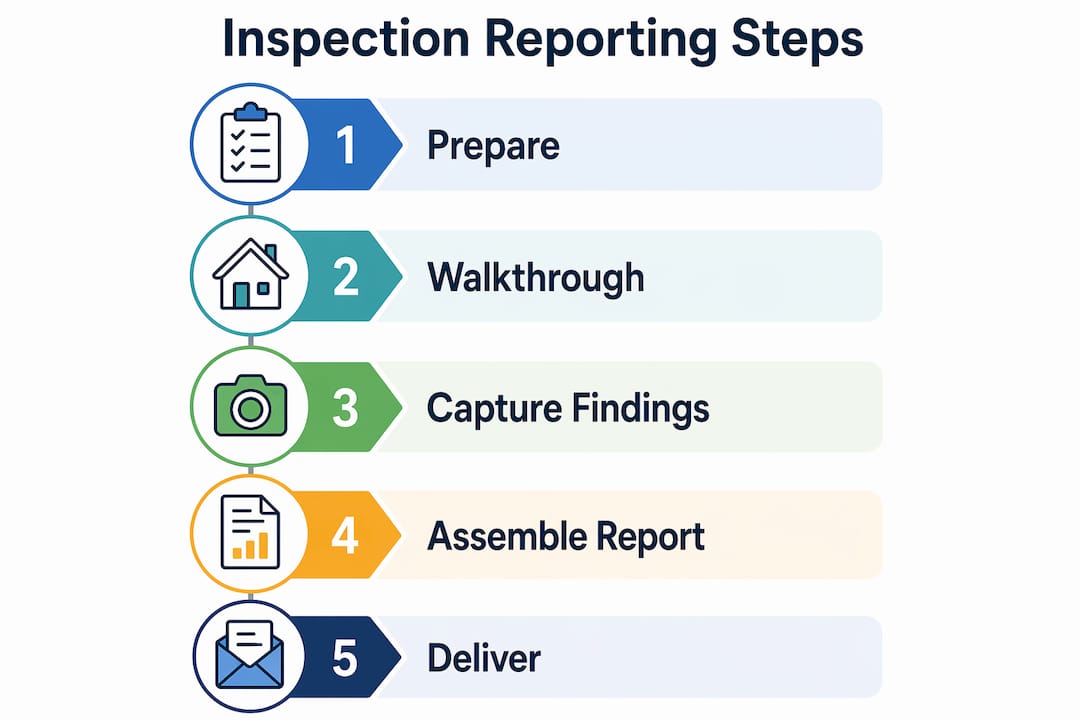
Step by step inspection reporting is a systematic process that converts physical property observations into structured, defensible, and actionable reports. For New Jersey property owners and managers, this process is not optional. State and local regulations require documented evidence of property condition, and a weak report creates legal exposure. The core workflow separates three distinct phases: pre-inspection preparation, on-site data collection, and report assembly. Each phase depends on standardized tools, precise language, and a clear understanding of what your report must prove.
What tools and templates do you need before starting?
Detailed inspection reporting starts before you set foot on the property. The documents and digital tools you bring determine how consistent and defensible your output will be. A standardized digital checklist covering scope, asset details, checkpoints, acceptance criteria, defect indicators, and evidence fields is the single most important preparation tool you can use. These checklists improve inspection consistency and align your findings with regulatory requirements, including EPA standards where applicable.
Before arriving on site, confirm you have the following:
- A digital checklist template organized by building system, not by room
- A photo-ready mobile device or tablet with a dedicated inspection app
- A pre-written scope statement that defines what will and will not be inspected
- A dictation script or voice recording tool for on-site narration
The 10-second dictation script used by professional inspectors follows five prompts: Location, Condition, Evidence, Risk, Recommend. This formula keeps your field notes report-ready without slowing your walkthrough. For New Jersey commercial properties, your template should also include a section for capital expenditure projections, since lenders and buyers frequently request this data alongside condition findings.
| Template Component | Purpose |
|---|---|
| Scope statement | Defines what was and was not inspected |
| System-based checklist | Organizes findings by structure, mechanical, electrical, plumbing |
| Photo evidence fields | Links images directly to specific checkpoints |
| Dictation script prompts | Produces consistent narrative notes on-site |
| Corrective action fields | Separates observations from recommended next steps |
Pro Tip: Before your first walkthrough on a new property type, run your template through one dry inspection with no client present. You will catch gaps in your checklist before they become gaps in your report.
How to conduct the physical inspection walkthrough
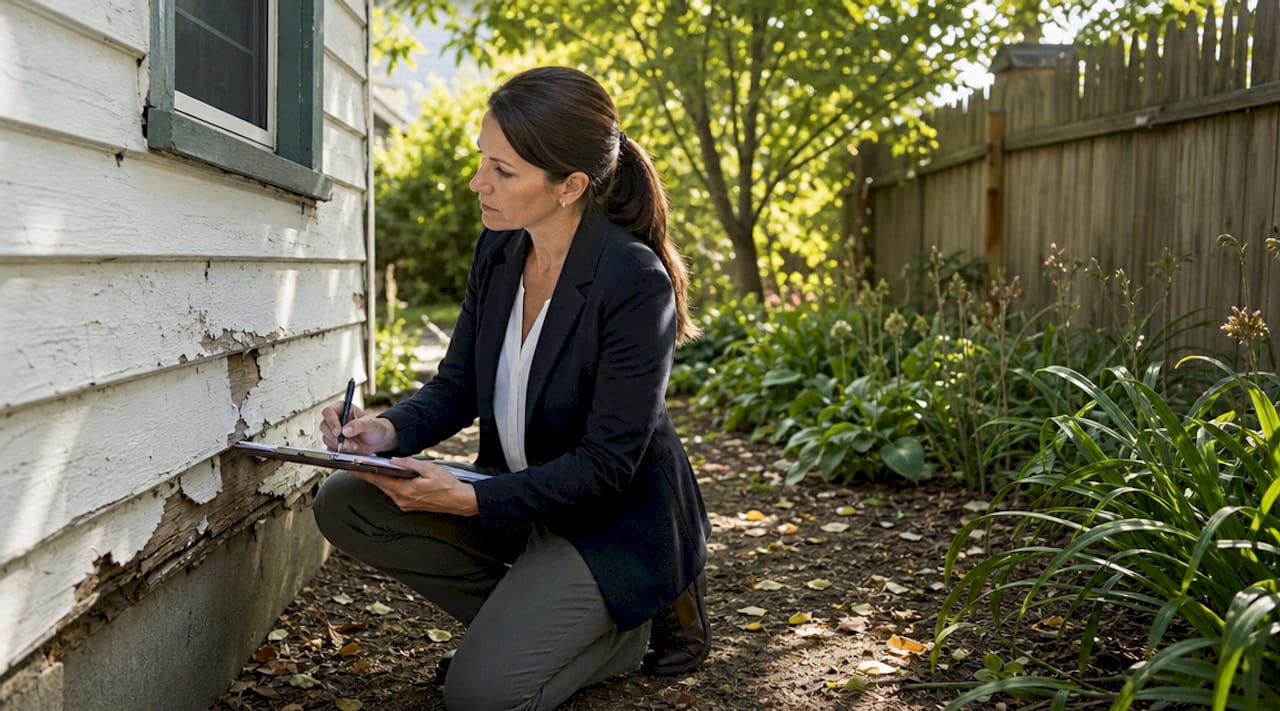
The walkthrough is where your report is built, not written. Every observation you fail to capture on-site is an observation you cannot recover later. A proven 3-phase workflow separates the physical inspection from the administrative writing phase entirely, which improves both accuracy and efficiency. Treat the walkthrough as map-building: you are constructing a complete picture of the property before you write a single sentence.
Follow this sequence for every property inspection:
- Start at the exterior perimeter. Document the foundation, grading, drainage, roof condition, and all utility entry points. Note weather conditions and the date and time of inspection. These details protect you legally if conditions change before the report is reviewed.
- Identify access limitations immediately. If a crawl space is blocked, a panel is locked, or a roof section is unsafe to walk, note it before proceeding. Undisclosed access limitations are a leading cause of post-inspection disputes in New Jersey.
- Move to major building systems in order. Work through structural, roofing, electrical, plumbing, HVAC, and then interior finishes. This sequence mirrors how commercial reports are organized by major building systems rather than room-to-room, which produces clearer findings and faster client review.
- Map sub-locations precisely. Instead of noting “bathroom,” note “second-floor hall bathroom, east wall, below window.” Precise sub-location language is what separates a defensible report from a checklist.
- Record site context throughout. Occupied versus vacant, recent renovation activity, visible deferred maintenance patterns. These observations add interpretive value to your raw findings.
Pro Tip: Walk the property twice if time allows. The first pass is for orientation and access checks. The second pass is for detailed documentation. Inspectors who combine both into one pass consistently miss findings in areas they visited early in the walkthrough.
What is the best approach to capturing inspection findings?
Capturing findings correctly during the walkthrough is where most inspection reports fail or succeed. The most common mistake is relying solely on checkboxes. Checkbox-only reports produce weak, less defensible documentation because they lack the narrative detail and sub-location specificity needed for a strong audit trail. Every finding needs a photograph, a precise description, and a structured note.
The DDID method provides the most reliable framework for writing report-ready findings. DDID stands for Describe, Defect, Implication, Direction, and it links each observation to its consequence and a non-prescriptive next step. This structure reduces client confusion and limits your liability as the reporting party.
Here is how DDID looks in practice for a New Jersey property:
- Describe: “Copper supply line at basement water heater, northeast corner, shows green oxidation at the threaded fitting.”
- Defect: “Active corrosion indicates a developing leak point.”
- Implication: “Unaddressed corrosion can result in water damage to the finished basement floor and substructure.”
- Direction: “Recommend evaluation by a licensed plumber prior to closing.”
Compare this to the alternative approaches:
| Approach | Example | Weakness |
|---|---|---|
| Checkbox only | “Plumbing: Deficient” | No location, no context, not defensible |
| Vague narrative | “There appears to be some corrosion near the water heater” | Vague language reduces actionable value |
| DDID method | Describe + Defect + Implication + Direction | Precise, actionable, legally defensible |
Photos must be placed inline with each finding, not collected in an appendix. Inline photos improve report usability and reduce disputes by connecting visual evidence directly to the written observation. For a standard residential property in New Jersey, plan for 50 to 100 quality images per inspection. Capture both a context shot showing the surrounding area and a close-up showing the specific defect.
How to assemble and finalize a professional inspection report
Report assembly is where your field notes become a professional document. The structure you choose determines how quickly a client, attorney, or regulator can extract the information they need. Organize findings by major building system, not by the order you walked the property.
Follow this assembly sequence:
- Write the executive summary first. List the three to five most significant findings with their locations and recommended actions. This section is what most clients read before anything else, and it sets the tone for the entire report.
- Organize body findings by system. Use sections for structural, roofing, electrical, plumbing, HVAC, and interior. Within each section, list findings in order of severity, with the most urgent items at the top.
- State scope and limitations explicitly. Clear scope statements define what was not inspected and why, which prevents misunderstandings and protects you from claims that you missed something you were never contracted to inspect. For New Jersey properties, this includes noting any systems that require separate licensed inspections, such as backflow preventers, septic systems, or oil tanks.
- Separate observations from recommendations. Keeping observations and recommendations in distinct sections avoids confusion and makes the report faster to review for contractors and attorneys.
- Include sign-off and standards reference. Note the inspection standards followed, the inspector’s license number, and the date. In New Jersey, referencing compliance with applicable state codes adds legal weight to your documentation.
| Report Section | Content |
|---|---|
| Executive summary | Top findings with severity ratings and recommended actions |
| System findings | Detailed DDID observations organized by building system |
| Scope and limitations | What was inspected, what was excluded, and why |
| Recommendations | Corrective actions with responsible party assignments |
| Sign-off | Inspector credentials, license number, inspection date |
A well-structured backflow report filing guide for New Jersey property managers illustrates how system-specific documentation, scope statements, and corrective action fields work together in a compliant report format.
What common mistakes undermine inspection report quality?
Even experienced property managers produce reports that create more problems than they solve. The most frequent errors are structural, not technical. Fixing them does not require more time on-site. It requires better habits during documentation and assembly.
The mistakes that most often lead to disputes or failed compliance reviews include:
- Burying photos in an appendix. Photos placed at the end of a report lose their connection to the findings they support. Always place images inline, directly below the finding they document.
- Mixing observations with recommendations. When a single paragraph describes a defect and then immediately prescribes a fix, reviewers cannot separate what you saw from what you suggest. Keep these in separate labeled sections.
- Using vague or hedged language. Phrases like “appears to be” or “possible evidence of” reduce the legal weight of your findings. Write what you observed, not what you suspect.
- Delaying report delivery. Write and deliver reports within 24 hours of the inspection. Memory fades, and late reports signal unprofessionalism to clients and regulators alike.
- Failing to assign responsible parties. Every corrective action should name who is responsible for follow-up: the property owner, a licensed contractor, or a specific licensed trade. Unassigned recommendations are rarely acted on.
Pro Tip: Voice-based reporting tools let you narrate findings on-site and generate structured notes automatically. Voice-based reporting technology reduces the time between walkthrough and finished report, which is the single biggest efficiency gain available to property managers who inspect multiple units.
Key takeaways
Effective inspection reporting requires separating the walkthrough, findings capture, and report assembly into distinct phases, each supported by standardized tools and precise language.
| Point | Details |
|---|---|
| Prepare before you arrive | Build your checklist, scope statement, and dictation script before the walkthrough begins. |
| Use DDID for every finding | Describe, Defect, Implication, Direction produces defensible and actionable observations every time. |
| Place photos inline | Inline images tied to specific findings reduce disputes and improve report usability. |
| Organize by building system | System-based structure makes reports faster to review for clients, attorneys, and regulators. |
| Deliver within 24 hours | Prompt delivery preserves accuracy and signals professionalism to all parties. |
What I have learned from years of property inspection documentation
After working with New Jersey property owners across residential and commercial portfolios, the pattern I see most often is this: inspectors spend 90% of their effort on the walkthrough and 10% on the report, when the ratio that actually protects clients is closer to 60/40. The report is the product. The walkthrough is the research.
The properties that generate the most post-inspection disputes are not the ones with the most defects. They are the ones with the weakest documentation. A property with 20 well-documented findings is far easier to defend than a property with 5 vague ones. I have seen New Jersey property managers face legal exposure not because they missed something on-site, but because their report language was too soft to hold up under scrutiny.
The other thing I tell every property manager I work with: adapt your templates. A template refined through multiple inspections performs better than a generic one downloaded once and never updated. Your first template is a draft. Every inspection you complete teaches you something about what your checklist missed or what your format made harder to read. Build that feedback in.
For backflow and water system inspections specifically, New Jersey has specific reporting and filing requirements that generic templates do not address. Working with a structured NJ inspection workflow that already accounts for local code language saves significant revision time and reduces compliance risk.
— Jordan
How Southjerseybackflow supports NJ property inspection compliance
Property owners and managers in New Jersey who need reliable, compliant inspection documentation for backflow and water systems have a direct resource in Southjerseybackflow.
Southjerseybackflow handles backflow testing and certification across New Jersey with reporting workflows built specifically for state regulatory requirements. Every inspection produces documentation that meets NJ filing standards, including scope statements, system findings, and corrective action records. For property managers who need to stay ahead of annual compliance deadlines, Southjerseybackflow’s NJ backflow compliance guide covers exactly what to submit, when to submit it, and how to structure your records to pass review without revisions.
FAQ
What is step by step inspection reporting?
Step by step inspection reporting is a structured process that divides property inspections into preparation, on-site data collection, and report assembly phases. Each phase uses standardized tools and language to produce consistent, defensible documentation.
How do I write clear and defensible inspection findings?
Use the DDID method: Describe the location and condition, identify the Defect, state the Implication, and provide a Direction for corrective action. This structure links every observation to a consequence and a recommended next step.
How many photos should an inspection report include?
Residential inspection reports typically include 50 to 100 quality images, placed inline with the findings they document rather than collected in an appendix. Inline placement reduces disputes and improves report usability.
What should an inspection report scope statement include?
A scope statement must define what was inspected, what was excluded, and the reason for any exclusions such as access limitations or systems requiring separate licensed inspections. Clear scope statements are the primary tool for managing legal liability.
How soon should I deliver an inspection report after the walkthrough?
Deliver the completed report within 24 hours of the inspection. Prompt delivery preserves the accuracy of your observations and meets the professional standards expected by clients, attorneys, and New Jersey regulatory bodies.