TL;DR:
- Regular backflow testing prevents contamination, water service disruptions, and costly fines.
- Certified professionals perform precise tests to ensure backflow preventers are functioning properly.
- Property owners must comply with annual testing, record keeping, and prompt repairs to meet NJ regulations.
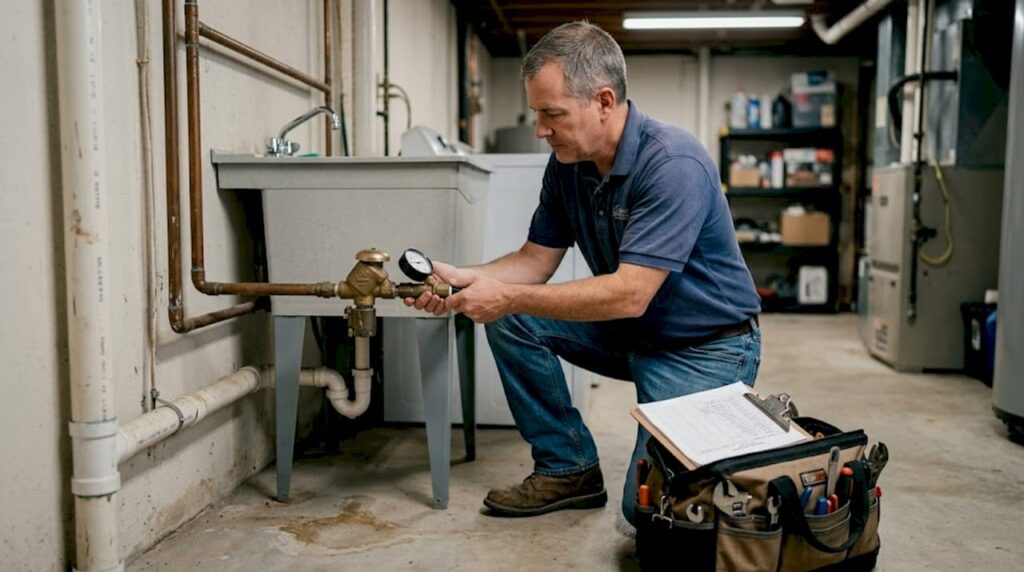
Skipping a backflow test might seem like a minor oversight, but it can result in contaminated drinking water reaching your neighbors, a water service shutoff, or fines that far exceed the cost of the test itself. Annual testing is required for most assemblies connected to public water systems in New Jersey under NJDEP N.J.A.C. 7:10-10. Whether you manage a commercial property, an irrigation system, or a multi-unit building, understanding what backflow testing involves and what the law expects of you is the fastest way to protect your property, your tenants, and your community.
Table of Contents
- What is backflow and why is testing necessary?
- Common backflow prevention devices in New Jersey
- How professional backflow testing works
- NJ backflow testing regulations and your responsibilities
- Our perspective: Why proactive backflow testing is non-negotiable in New Jersey
- Get expert help with backflow testing and compliance in New Jersey
- Frequently asked questions
Key Takeaways
| Point | Details |
|---|---|
| Annual testing is required | New Jersey law mandates yearly backflow device tests for most properties. |
| Device type matters | Selecting the right backflow preventer for your risk level ensures compliance and safety. |
| Certified testers only | Backflow tests must be performed by ASSE 5000 certified professionals. |
| Stay ahead of repairs | Addressing small device issues right away can prevent costly water supply interruptions. |
| Missed tests carry penalties | Non-compliance may result in fines, shutoffs, or even liability in contamination cases. |
What is backflow and why is testing necessary?
Backflow is the unwanted reversal of water flow in your plumbing system. Instead of water moving from the public supply into your building, it flows backward, potentially pulling contaminants into the clean water supply. This is not a rare edge case. It happens regularly, and the consequences can be serious.
There are two main causes. Backsiphonage occurs when a sudden drop in water pressure, like during a water main break or heavy firefighting demand, creates a vacuum that sucks water backward. Backpressure happens when the pressure inside your system exceeds the pressure from the public supply, pushing water back through the connection. Boilers, irrigation systems, and commercial equipment are common culprits.
The risks tied to uncontrolled backflow include:
- Contaminated drinking water reaching other properties on the same line
- Exposure to fertilizers, pesticides, cleaning chemicals, or even sewage
- Serious health risks for building occupants and the broader community
- Regulatory fines and potential water service interruption
- Legal liability if contamination causes harm
This is exactly why understanding the importance of backflow testing goes beyond paperwork. The device protecting your connection is a mechanical assembly, and mechanical parts wear out. Seals degrade. Springs lose tension. A device that passed last year may not pass this year.
“Annual testing mandated by NJ regulations protects public health by ensuring backflow prevention assemblies are functioning as designed.”
Pro Tip: Do not assume a newer installation is problem-free. Infrequently used outlets and recently installed assemblies can still allow backflow incidents, especially if pressure conditions in your area fluctuate. Learning why backflow testing is necessary helps you stay ahead of issues rather than reacting to them.
Common backflow prevention devices in New Jersey
Not every property uses the same type of backflow preventer. The device installed on your property depends on the level of hazard your connection presents to the public water supply. Getting this right matters, because using the wrong device for your risk level is itself a compliance violation.
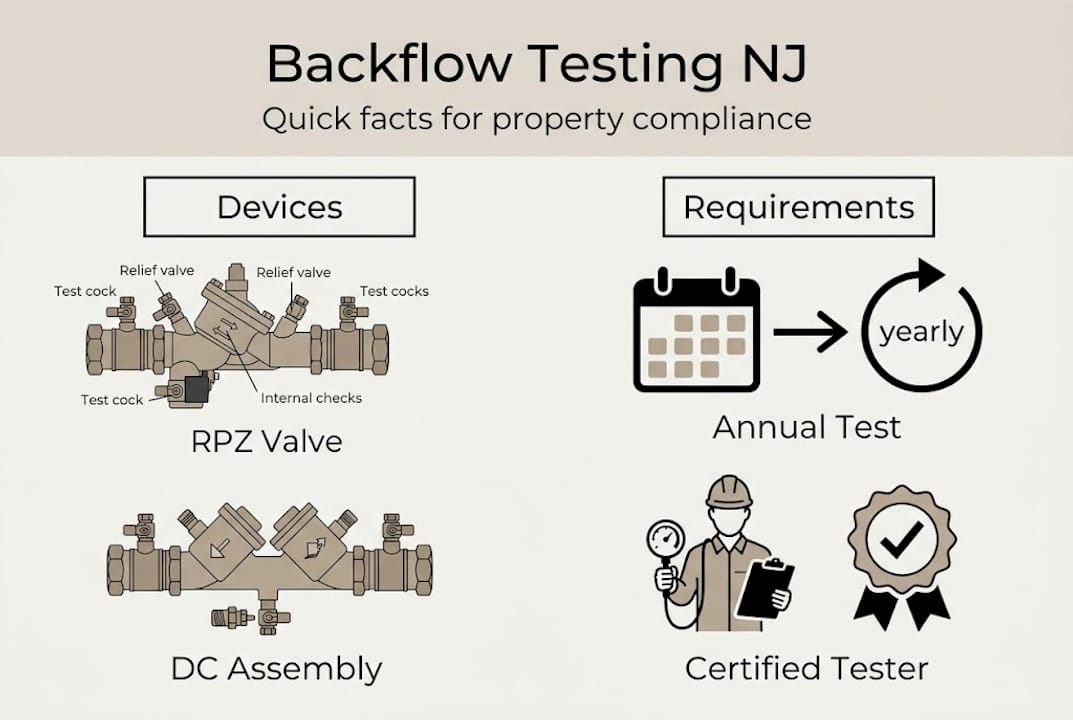
The three most common assemblies you will encounter in New Jersey are:
| Device | ASSE Standard | Hazard Level | Typical Use Cases |
|---|---|---|---|
| Reduced Pressure Zone (RPZ) | ASSE 1013 | High | Boilers, irrigation, healthcare, commercial kitchens |
| Double Check Valve Assembly (DCVA) | ASSE 1015 | Low to moderate | General commercial, multi-unit residential |
| Pressure Vacuum Breaker (PVB) | ASSE 1020 | Low | Seasonal irrigation, hose connections |
ASSE standards govern device selection based on hazard classification, which determines both the device type and the testing protocol applied to it.
High-risk property types in New Jersey that typically require RPZ assemblies include:
- Healthcare facilities and medical offices
- Properties with irrigation systems connected to the potable supply
- Commercial kitchens and food processing operations
- Buildings with boilers or hydronic heating systems
- Car washes and industrial facilities
Understanding the types of backflow devices helps you confirm that what is installed on your property matches your hazard classification. If it does not, your water purveyor may require an upgrade before your next test.
Pro Tip: RPZ assemblies are required for most irrigation and boiler connections because backpressure, not just backsiphonage, is a real risk in those applications. A PVB will not protect against backpressure, so using one where an RPZ is required creates a compliance gap. If you are unsure what you have, learning how backflow preventers work can help you ask the right questions.
How professional backflow testing works
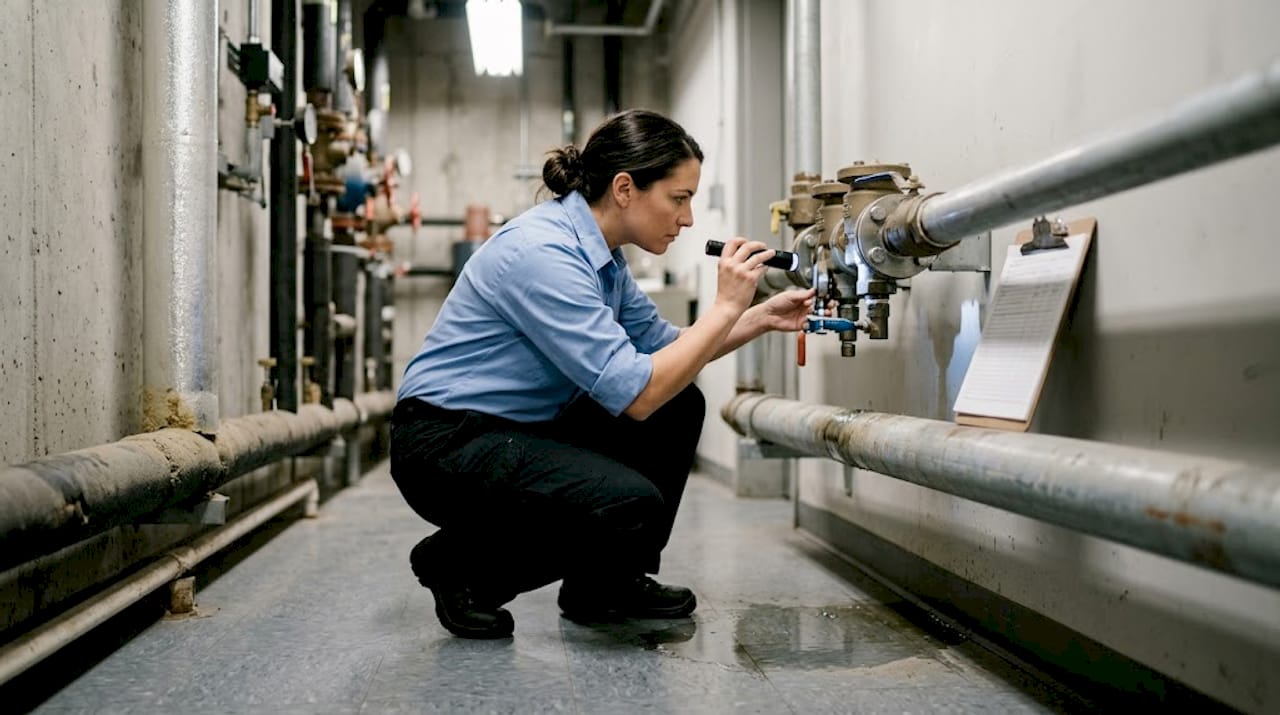
A backflow test is not a visual inspection. It is a precise mechanical evaluation performed with calibrated equipment by a certified tester. Here is how a standard professional test unfolds:
- Shut down downstream flow to isolate the assembly and establish stable conditions.
- Attach differential pressure gauges to the test cocks on the assembly.
- Open and close test cocks in a specific sequence to measure pressure on each side of the check valves.
- Record pressure differentials for each check valve and the relief valve (on RPZ assemblies).
- Evaluate results against ASSE minimum standards for the device type.
- Document findings on the official test report form and note any repairs made.
Calibrated differential pressure gauges are used on test cocks to measure check valve differentials per ASSE 1013 and 1015 standards. This is not something you can approximate with standard plumbing tools.
Here is what the minimum passing pressure differentials look like for the most common assemblies:
| Assembly Type | First Check Valve | Second Check Valve | Relief Valve Opens Below |
|---|---|---|---|
| RPZ (ASSE 1013) | 5.0 psi | 1.0 psi | 2.0 psi above downstream |
| DCVA (ASSE 1015) | 1.0 psi | 1.0 psi | N/A |
Inspectors also look for physical leaks at the body seals, fouled or damaged check discs, and continuous discharge from the RPZ relief valve, which signals a failed first check. Vertical installations and assemblies in confined spaces add complexity and may require special test procedures. Reviewing common backflow issues gives you a sense of what repairs are most frequently needed after testing.
Knowing how to handle the paperwork side is just as important as the test itself. Understanding passing and submitting backflow tests in New Jersey keeps you from missing a reporting deadline after a successful test.
NJ backflow testing regulations and your responsibilities
New Jersey’s backflow prevention rules are clear, and the responsibility falls squarely on the property owner or manager. Here is what the law requires:
- Annual testing of all backflow prevention assemblies connected to public water systems
- Testing performed only by an ASSE Series 5000 certified tester
- Completed test reports submitted to your water purveyor within 30 days of the test date
- Maintenance of test records for a minimum period as specified by your local authority
- Immediate repair or replacement of any assembly that fails the test, followed by a retest
“Property owners who fail to comply risk fines, water service shutoffs, and significant liability exposure if a contamination event occurs.”
Understanding how often testing is required in New Jersey is the starting point for building a reliable compliance schedule. Most properties need annual testing, but some high-risk sites face more frequent requirements or additional survey obligations from their water purveyor.
After your test is complete, your responsibilities do not end with the tester leaving the property. You need to confirm the report was submitted, keep your copy on file, and schedule any required repairs before the deadline. If your assembly failed, a retest must be completed and documented before the report cycle closes.
Pro Tip: High-risk properties, particularly those with irrigation systems or industrial connections, may be flagged for cross-connection surveys in addition to annual testing. Staying current on NJ backflow regulations helps you anticipate these requirements before your water purveyor contacts you.
Our perspective: Why proactive backflow testing is non-negotiable in New Jersey
Here is something most compliance guides will not tell you: meeting the annual testing requirement is the minimum, not the goal. We have seen properties that passed their test in the spring and had a failing assembly by fall because a small repair was deferred. The regulations give you a deadline, not a guarantee.
Older assemblies are increasingly being flagged for replacement rather than repair, and the cost difference is significant. Catching a worn check disc during a routine test costs a fraction of what emergency service and potential liability exposure cost after an incident. The importance of regular testing is not just about staying compliant. It is about having documentation that shows you acted responsibly if something goes wrong.
Pro Tip: Address small repairs immediately after testing. A minor fix today prevents an emergency call, a failed retest, and a gap in your compliance record that could complicate things if a contamination claim ever surfaces.
Consistent compliance also signals due diligence to your water purveyor, your insurer, and any regulatory body reviewing your property. That matters more than most property owners realize until they need it.
Get expert help with backflow testing and compliance in New Jersey
Navigating backflow compliance on your own takes time, and one missed step can put your property out of compliance fast. Working with a certified professional removes that uncertainty.
At South Jersey Backflow, we handle the full process: testing, documentation, and submission, so you do not have to track deadlines or worry about paperwork errors. If you want to understand NJ backflow testing compliance before booking, our resource library is a great place to start. When you are ready to schedule, our certified backflow testing service covers residential, commercial, and industrial properties across New Jersey. Visit South Jersey Backflow to get started.
Frequently asked questions
How often is backflow testing required in New Jersey?
Most assemblies require annual testing under NJDEP N.J.A.C. 7:10-10, with reports submitted to water purveyors within 30 days. High-risk sites may face more frequent testing requirements.
Who is allowed to conduct backflow testing?
Only ASSE Series 5000 certified testers are authorized to perform and report backflow tests in New Jersey. Unlicensed testing is not accepted by water purveyors.
What happens if my property fails a backflow test?
Failed assemblies must be repaired or replaced and then retested. Many failures are repairable same-day, but older devices are increasingly trending toward full replacement.
What paperwork is needed after a backflow test?
Reports must be submitted to your water purveyor within 30 days of the test date. Keep a copy of the completed test report for your own records as well.