TL;DR:
- New Jersey law mandates annual backflow device testing by licensed professionals to ensure compliance.
- Certified experts protect water quality by identifying hazards and preventing contamination.
- Professional maintenance prevents costly repairs, legal issues, and health risks associated with backflow failures.
As a property owner or manager in New Jersey, backflow prevention is not a task you can afford to guess at. A single lapse in compliance can trigger fines, water service shutoffs, and serious health risks for everyone connected to your system. New Jersey holds property owners legally responsible for maintaining properly functioning backflow prevention devices, and the rules are specific. Certified professionals are not just a convenience here. They are your legal and practical shield, ensuring your water stays safe, your records stay clean, and your property stays protected year after year.
Table of Contents
- Ensure compliance with New Jersey regulations
- Protect your water quality and health
- Prevent costly repairs and emergency damage
- DIY vs. hiring professionals: Head-to-head comparison
- Our take: The overlooked value of certified backflow experts
- Need help with backflow protection? We’re here.
- Frequently asked questions
Key Takeaways
| Point | Details |
|---|---|
| Ensures legal compliance | Licensed professionals handle required annual testing and paperwork in New Jersey. |
| Protects water quality | Expert testing prevents dangerous contaminant entry into your drinking water. |
| Reduces costly emergencies | Routine professional maintenance catches issues early and avoids major repair bills. |
| Peace of mind | Rely on certified specialists for consistent, year-round protection and support. |
Ensure compliance with New Jersey regulations
New Jersey takes backflow prevention seriously, and the law backs that up with real consequences. Under NJ backflow regulations explained, property owners connected to public water systems must have their backflow prevention devices tested annually by a licensed professional. This is not optional. The NJDEP N.J.A.C. 7:10 regulations mandate annual testing by certified testers, and only those certified testers can submit the official reports your municipality requires.
What does non-compliance actually look like in practice? It can mean:
- Monetary fines issued by your local water authority or the state
- Water service interruption until you demonstrate compliance
- Failed property inspections that delay sales or certifications
- Liability exposure if contamination occurs and you lacked documentation
Certified professionals handle every step of the reporting process. They know which forms to file, which local water authorities require what format, and how to keep your records audit-ready. That matters enormously when a municipal inspector shows up unannounced or when you are renewing a commercial lease.
Regulations also change. The state requirements overview is updated periodically, and staying current is part of what you pay a professional for. A certified tester tracks rule changes so you do not have to.
“Hiring certified backflow professionals ensures compliance with NJDEP N.J.A.C. 7:10 regulations requiring annual testing.”
Understanding the different backflow device types is also part of what a certified tester brings to your property. Choosing the wrong device for your hazard level is a compliance failure waiting to happen, and only a trained eye can spot it before it becomes your problem.
Now that you understand the importance of professional involvement, let’s look at how pros protect water quality.
Protect your water quality and health
Compliance paperwork is one thing. What backflow prevention actually does for your water is something else entirely. When a backflow event occurs, contaminated water flows backward into the clean supply. That contamination can include fertilizers, pesticides, industrial chemicals, bacteria, and even raw sewage. The results range from unpleasant to genuinely dangerous.
Professional backflow testers know exactly what they are looking for and why it matters. They understand that backflow contamination in homes and commercial buildings often goes undetected until someone gets sick or a smell triggers a complaint. By then, the damage is done.
Here is what a certified professional does that an untrained person simply cannot:
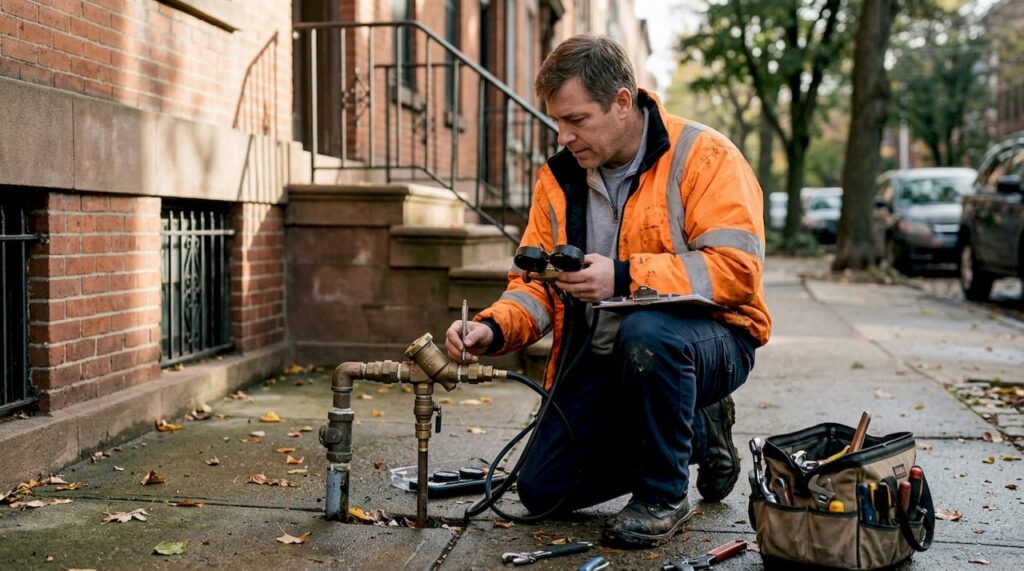
- Identifies the correct device for your specific hazard level, whether that is a Reduced Pressure Zone (RPZ) assembly for high-hazard connections or a Double Check Valve Assembly (DCVA) for lower-risk applications
- Tests under actual field conditions, not just visual checks
- Spots early warning signs like slow pressure drops, valve wear, or corrosion that signal a device is about to fail
- Verifies your water meets health standards after testing is complete
The benefits of backflow testing go beyond paperwork. A professional catches the subtle signs that something is off before it becomes a public health issue. Improper testing or amateur repairs can actually increase contamination risk by disturbing a device that was marginally functional and leaving it worse than before.
Pro Tip: If your property has an irrigation system, a pool, or a fire suppression line, those are high-priority connections for backflow risk. Make sure your tester specifically evaluates each one.
Preventing contamination risks like chemicals and bacteria is not just about your property. A backflow event on your line can affect neighbors and entire municipal zones depending on your system’s position. Professional service is a community responsibility, not just a personal one.
Compliance is only half the story. Next, let’s explore what professionals do differently to protect your property and system.
Prevent costly repairs and emergency damage
Backflow failures do not just create health problems. They create expensive ones. Pipe damage, water intrusion, mold growth, and emergency repair calls can add up to thousands of dollars in a single incident. Routine professional maintenance is what keeps those scenarios from becoming your reality.
Here is how a professional approach prevents financial damage:
- Early detection of minor issues before they escalate into burst pipes or full device failures
- Correct device installation that eliminates repeat test failures and unnecessary service calls
- Detailed written reports that support insurance claims and protect you during city audits
- Seasonal inspections that catch freeze damage or pressure changes before they cause a system failure
Professionals also know the backflow failure warning signs that property owners typically miss. A slight drop in water pressure, a relief valve that drips occasionally, or a device that is older than ten years are all red flags that warrant professional attention before they become emergencies.
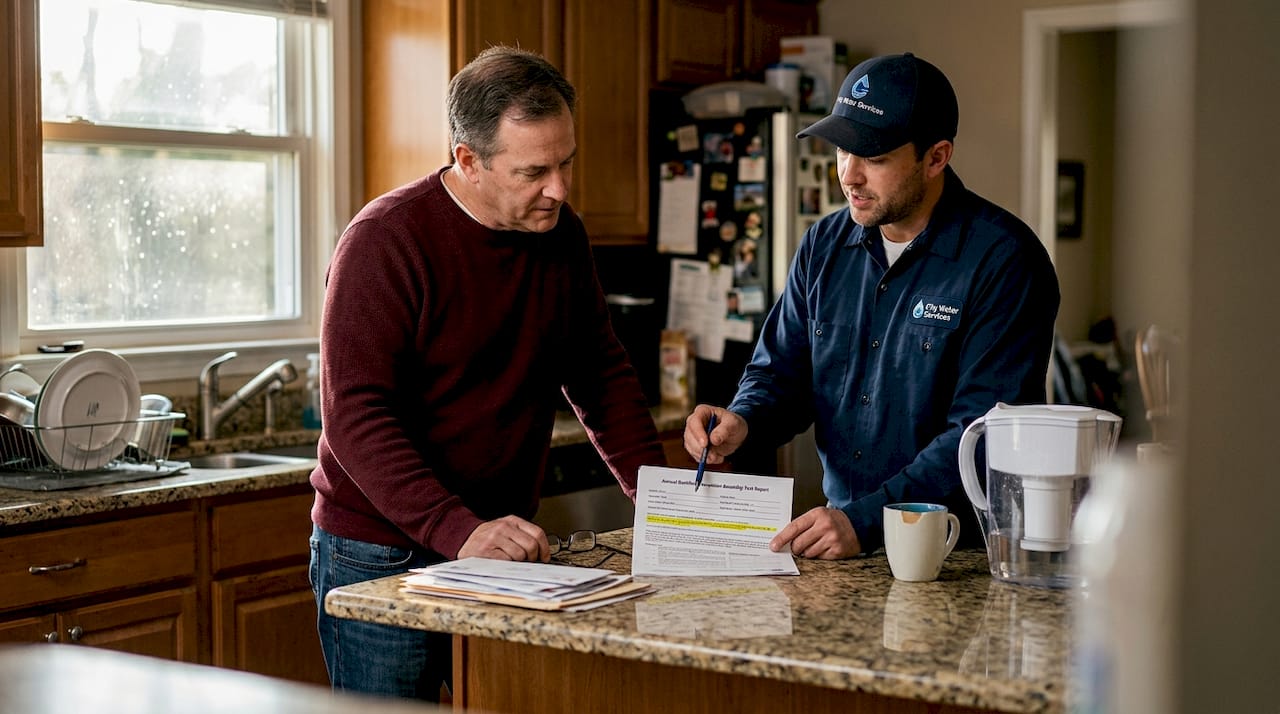
Pro Tip: Ask your backflow professional for a written condition report after every test. That document is invaluable if you ever need to file an insurance claim or dispute a city fine.
Following seasonal maintenance tips is something your certified tester can walk you through as well. New Jersey winters are hard on backflow assemblies. Professionals know how to winterize devices properly and check for freeze-related damage in the spring, which is when most hidden failures surface.
Proper device selection also prevents infrastructure damage over the long term. Installing the wrong assembly for your system’s pressure or hazard level creates chronic problems that no amount of testing will fix. Getting it right the first time, with a professional’s guidance, is always cheaper than fixing it later.
Safeguarding your finances is vital. Now let’s compare how professionals truly deliver peace of mind compared to DIY approaches.
DIY vs. hiring professionals: Head-to-head comparison
Some property owners wonder whether they can handle backflow testing themselves to save money. In New Jersey, the answer is clear: you cannot legally do it yourself and stay compliant. But beyond legality, the practical risks of DIY are significant.
| Factor | Professional service | DIY approach |
|---|---|---|
| Legal compliance | Certified reports submitted | Cannot submit certified reports |
| Hazard identification | Trained to spot all risk levels | Likely to miss edge cases |
| Device knowledge | Knows RPZ, DCVA, and more | Limited to basic familiarity |
| Emergency readiness | Available year-round | No winter or emergency support |
| Documentation | Full audit-ready records | No official documentation |
| High-risk sites | Qualified for hospitals, irrigation | Not equipped for complex systems |
For common backflow issues that seem minor, a DIY attempt can actually make things worse. Disturbing a valve assembly without the right tools or training can void manufacturer warranties and create new leak points.
High-risk sites require even more expertise. High-risk locations like hospitals and chemigation irrigation systems require semi-annual professional tests, and professionals are trained to assess for freeze damage that would otherwise go unnoticed until spring brings a failure.
The financial math is straightforward. A professional annual test costs a fraction of what a single emergency repair, city fine, or contamination remediation would run. The risk-adjusted cost of DIY is almost always higher, even before you factor in the legal exposure.
Now, with the benefits and risks clear, let’s summarize what property owners should prioritize in their decision-making.
Our take: The overlooked value of certified backflow experts
Most conversations about backflow testing focus on compliance and cost. Those matter, but they miss something important: the value of continuity.
When you work with the same certified professional year after year, they build a picture of your system over time. They remember that your RPZ assembly ran a little warm last spring. They notice when a reading shifts slightly from the prior year. That kind of institutional knowledge is genuinely hard to replace, and it is something a one-time service call or a new technician every season simply cannot replicate.
At South Jersey Backflow, we have seen firsthand how a long-term relationship with a certified tester catches problems that a fresh set of eyes would walk right past. Experienced professionals also educate you along the way, helping you understand why routine testing matters and what to watch for between visits. Compliance is just the starting point. The real value is in the partnership.
Need help with backflow protection? We’re here.
If you have read this far, you already understand that professional backflow service is not optional in New Jersey. It is the difference between a property that runs smoothly and one that faces fines, failures, and health risks.

Our team specializes in regular backflow testing for residential and commercial properties across New Jersey, with deep knowledge of state regulations and 24/7 support when emergencies arise. We handle the testing, the reports, and the follow-up so you never have to wonder if you are covered. Learn more about how backflow preventers work or reach out to schedule your next test. Visit South Jersey Backflow to get started today.
Frequently asked questions
How often must backflow devices be tested in New Jersey?
Annual testing is required for backflow prevention devices on public water systems in New Jersey, and only licensed professionals can perform and certify those tests.
What happens if I skip backflow testing?
Skipping tests can result in fines and water interruption from your local water authority, plus potential liability if a contamination event occurs without documented compliance.
Can I perform my own backflow testing?
No. Certified testers are required under New Jersey law, and only they can submit the official reports your municipality needs for compliance.
What are the health risks of backflow incidents?
Backflow can push chemicals and bacteria into your drinking water supply, leading to serious illness and potential public health emergencies affecting your entire neighborhood.
Pingback: Top 3 Njprosolutions.com Alternatives 2026