
FAQ
How to Winterize Your Backflow Preventer in New Jersey to Prevent Freeze Damage
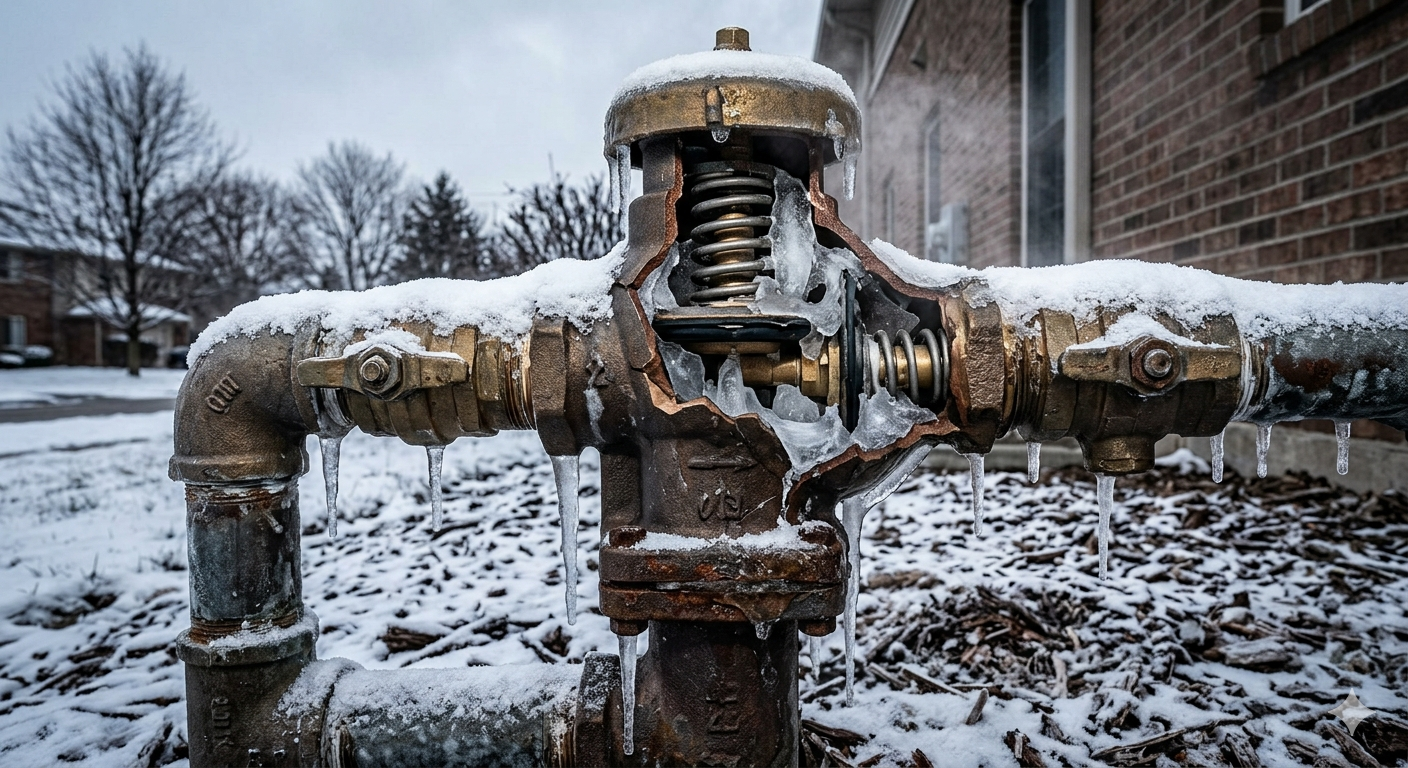
New Jersey winters are a real threat to outdoor backflow preventers. Temperatures routinely drop below 32°F across the state from December through March, and hard freeze events — where temperatures stay below freezing for extended periods — are common in all 21 counties. A single hard freeze can crack a PVB bonnet, rupture a check valve diaphragm, or shatter a plastic test cock cap. The resulting damage can mean a failed annual test, an expensive repair, and potentially a non-functional device until service is arranged. This guide covers everything you need to know to protect your backflow preventer through every New Jersey winter.
For protection options beyond seasonal winterization, see our guide to backflow preventer enclosures.
Why Freeze Damage Is So Common in New Jersey
Backflow preventers contain water trapped in their internal chambers — between check valves, in the relief zone, and in the test cock ports. When temperatures drop below freezing, this trapped water expands as it turns to ice. The expansion force (water expands approximately 9% when freezing) is tremendous — far exceeding the tensile strength of rubber diaphragms, plastic test cock caps, and even the stress tolerance of brass or bronze body castings under certain conditions.
New Jersey’s freeze risk is compounded by the fact that many residential backflow preventers are PVB assemblies installed outdoors on exposed risers — often on the shaded north or west sides of homes where freeze conditions persist longer. Without protection, these devices are among the most freeze-vulnerable components in a residential plumbing system.
Which Devices Need Winterization?
Pressure Vacuum Breakers (PVBs) — Most Vulnerable
PVBs must be winterized annually without exception. They are typically installed outdoors above grade, contain water in the bonnet assembly throughout the irrigation season, and are highly susceptible to freeze damage. The bonnet (the dome-shaped top section containing the air inlet valve) is particularly vulnerable — a frozen bonnet frequently cracks, requiring bonnet replacement in addition to internal rebuild work.
RPZ Assemblies — Vulnerable if Outdoors
Outdoor RPZ assemblies are vulnerable to freeze damage, particularly at test cock caps, fitting connections, and the relief valve discharge port. Indoor RPZ assemblies are generally safe unless the mechanical room is unheated. Outdoor RPZs should be protected with an insulated enclosure; see our detailed guide on enclosures for options.
DCVAs — Moderate Risk
DCVAs in underground vaults are generally protected from freeze by the insulating effect of the soil above them. Above-grade DCVAs in enclosures or mechanical rooms are generally at lower risk than exposed PVBs but should still be evaluated for freeze protection based on their specific installation.
Step-by-Step: How to Winterize a Residential PVB
Shut down the irrigation system controller: Set the irrigation controller to the ‘off’ or ‘rain’ setting, or disconnect power to it, so no irrigation zones will activate during the winter.
Locate the backflow preventer’s inlet shutoff valve: This is the ball valve or gate valve on the upstream side of the backflow preventer assembly. Turn it to the fully closed position.
Open the test cocks: Using a flat screwdriver or a ¼-inch square key, open the test cocks (there are typically two on a PVB) by turning them 45 degrees to the open position. This allows water trapped in the assembly to drain out.
Drain the assembly: Allow the assembly to fully drain. You may see a small amount of water exit from the test cocks and possibly from the bonnet vent as the air inlet opens.
Leave test cocks in the open position: Keep test cocks open throughout the winter. This prevents any water that might infiltrate the assembly from becoming trapped and freezing.
Close the outlet shutoff valve (if present): If the PVB has a downstream shutoff, close it as well.
Drain the irrigation lines: The irrigation system itself should also be blown out with compressed air (standard irrigation winterization) or drained by gravity to remove water from all lines.
What About Protecting Rather Than Draining?
For RPZ assemblies and other devices that can’t be drained (such as those protecting fire suppression systems that must remain charged), the appropriate winter protection is an insulated backflow enclosure rather than a drain-down procedure. Our backflow preventer enclosures page covers the types, sizing, and installation of these protective cabinets. South Jersey Backflow provides professional enclosure installation throughout all of New Jersey.
When to Re-Activate in Spring
Re-activate your backflow preventer in spring only after the risk of hard freeze has passed — typically mid-March to April 1 in most New Jersey locations, though South Jersey locations along the coast may be safe earlier and northern counties may need to wait until mid-April. Before re-activating, close the test cocks (return them to the closed position), then slowly open the inlet shutoff valve to re-pressurize the assembly. Check for any new leaks that might indicate freeze damage occurred during the winter. If anything looks wrong, schedule a professional backflow testing and certification service before putting the irrigation system into full operation.
South Jersey Backflow: Winterization and Spring Start-Up Services
South Jersey Backflow provides backflow preventer winterization and spring start-up services for residential and commercial properties throughout all of New Jersey. We also install backflow preventer enclosures that eliminate the need for annual drain-down on RPZ assemblies and other devices that can’t be easily winterized. Contact us to schedule service before the first freeze of the season. contact South Jersey Backflow.
Schedule Your Backflow Service Anywhere in New Jersey
South Jersey Backflow has proudly served residential and commercial customers across all of New Jersey since 2004. Our certified technicians provide annual backflow testing and certification, expert repairs and rebuilds, and protective backflow enclosures — all with transparent pricing, complete paperwork handling, and 24/7 emergency availability. Call (856) 291-6809 or contact us online to get started today.